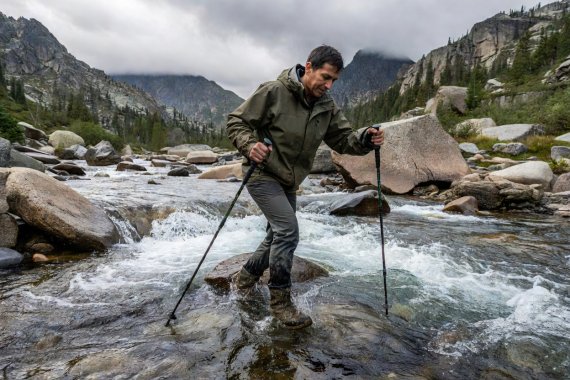
Survival Skills Syllabus
Skills weigh nothing in your backpack, but they dictate whether a critical route complication remains an operational challenge or becomes a fatal event. Below are core techniques every wilderness navigator must master before venturing off-grid.
Dead Reckoning & Terrain Association
Dead reckoning involves calculating your current position based upon an estimated pace count, magnetic heading, and elapsed time from a known benchmark. When dense alpine fog eliminates visual ridgeline landmarks, pace counting becomes your sole coordinate reference.
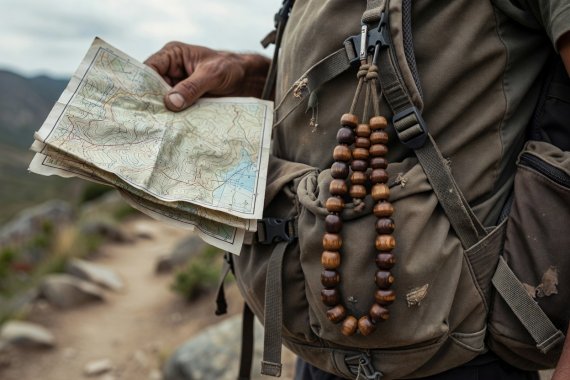
Calibrate your pace beads over measured 100-meter stretches across flat ground, 20-degree ascents, and loose boulder talus. Always compensate for terrain elongation: steep slopes increase total footsteps per kilometer by up to 45 percent.
Hypothermia Prevention & The Cold-Wet Trap
Hypothermia strikes most aggressively between 0°C and 10°C (32°F and 50°F) in wet, windy conditions. Rain soaking into cotton or unvented clothing conducts body heat away from vital organs 25 times faster than still air.
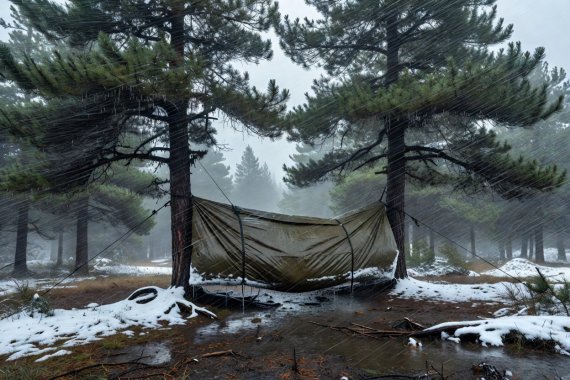
The cardinal rule of cold wilderness exertion: Be Bold, Start Cold. Strip insulation layers before heart rates spike and sweat saturates baselayers. If clothing becomes drenched, stop immediately, rig a windproof tarp, and change into sealed dry-bag thermals.
High-Discharge River Fords
Drowning during unbridged glacial runoff crossings represents the single leading cause of wilderness trekker fatalities. When spring snowmelt floods mountain riverbeds, standard stepping stones become submerged under churning hydraulic torrents.
Always unbuckle your backpack hip-belt and sternum strap before entering water so the pack can be jettisoned immediately if swept off your feet. Face upstream using a rigid trekking pole as the third leg of a stable tripod, inching sideways across wide braided gravel bars rather than deep narrow channels.