Desert Crossing Dossiers
Desert travel presents a hostile inversion of alpine challenges: while mountains threaten cold and drowning, arid washouts kill through hyperthermia and rapid cellular dehydration. Below are surveyed overland dossiers for high-risk desert traverses.
The Death Valley Salt Basin Traverse
Sector Distance: 64.0 Kilometers | Surface: Sharp Halite Salt Polygons | Thermal Peak: 47°C (116°F)
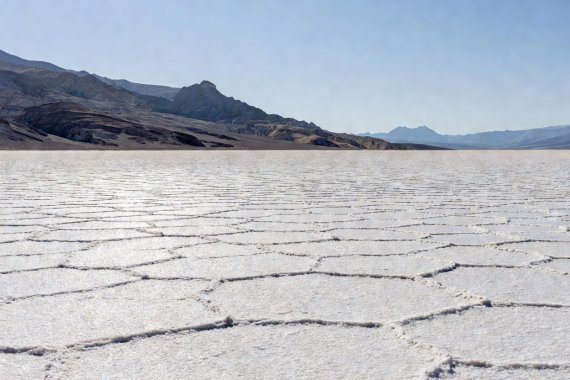
Crossing the Badwater salt pan on foot requires nighttime or dawn travel exclusively. The hexagonal salt crust fractures under heavy pack weights, exposing trecherous sulfurous brine underneath that will quickly destroy leather boots.
Hydration protocols require exact electrolyte balancing: pure water consumption without sodium replacement triggers life-threatening hyponatremia within 18 hours of continuous perspiration under heavy heat radiation.
Mojave East-West Sand Ramp Traverse
Sector Distance: 92.5 Kilometers | Surface: Shifting Eolian Sand Dunes | Primary Risk: Sandstorm Disorientation
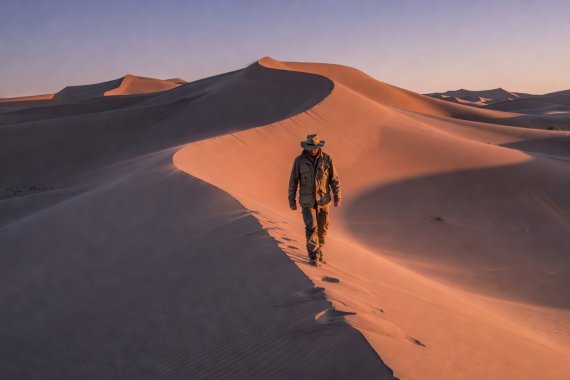
Traversing the Kelso Dunes and surrounding volcanic cinder cones demands specialized gaiters to prevent abrasive silica from blistering feet down to raw fascia within five miles. Sand locomotion increases metabolic energy expenditure by up to 2.1 times over firm trail surfaces.
Navigation bearings must be logged constantly against distant rock monoliths, as windblown dust can reduce horizon visibility from 40 miles down to under 15 meters in less than ten minutes.
Black Rock Playa Solar Crossing
Sector Distance: 56.0 Kilometers | Surface: Alkaline Silt Bed | Hazards: Total Landmark Absence
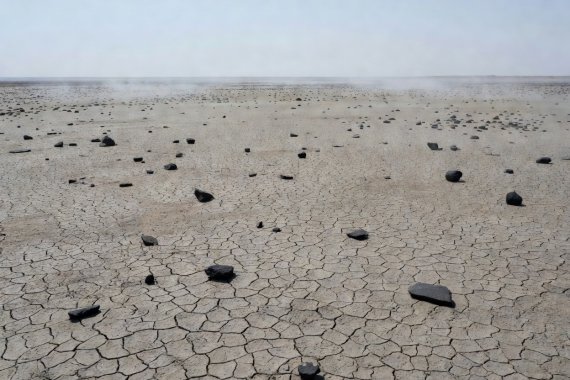
The Black Rock Desert playa is an ancient dried lakebed that presents near-total sensory deprivation. With zero terrain contour lines over a 400-square-mile expanse, natural human gait biases inevitably pull unassisted walkers in wide circular loops.
Navigators must employ continuous sighting sticks or GPS backtrack breadcrumb trails to maintain a true bearing across the dry alkali crust. Rains instantly turn the fine lakebed clay into wheel-choking mud that halts all vehicular and foot travel.
Arid Zone Water Weight Mathematics
Water weighs exactly 1 kilogram per liter (8.34 lbs per gallon). In 40°C heat under direct solar radiation, a self-supported explorer expels between 700ml and 1,200ml of water per hour of active foot march.